They learn by building something real with their own hands.
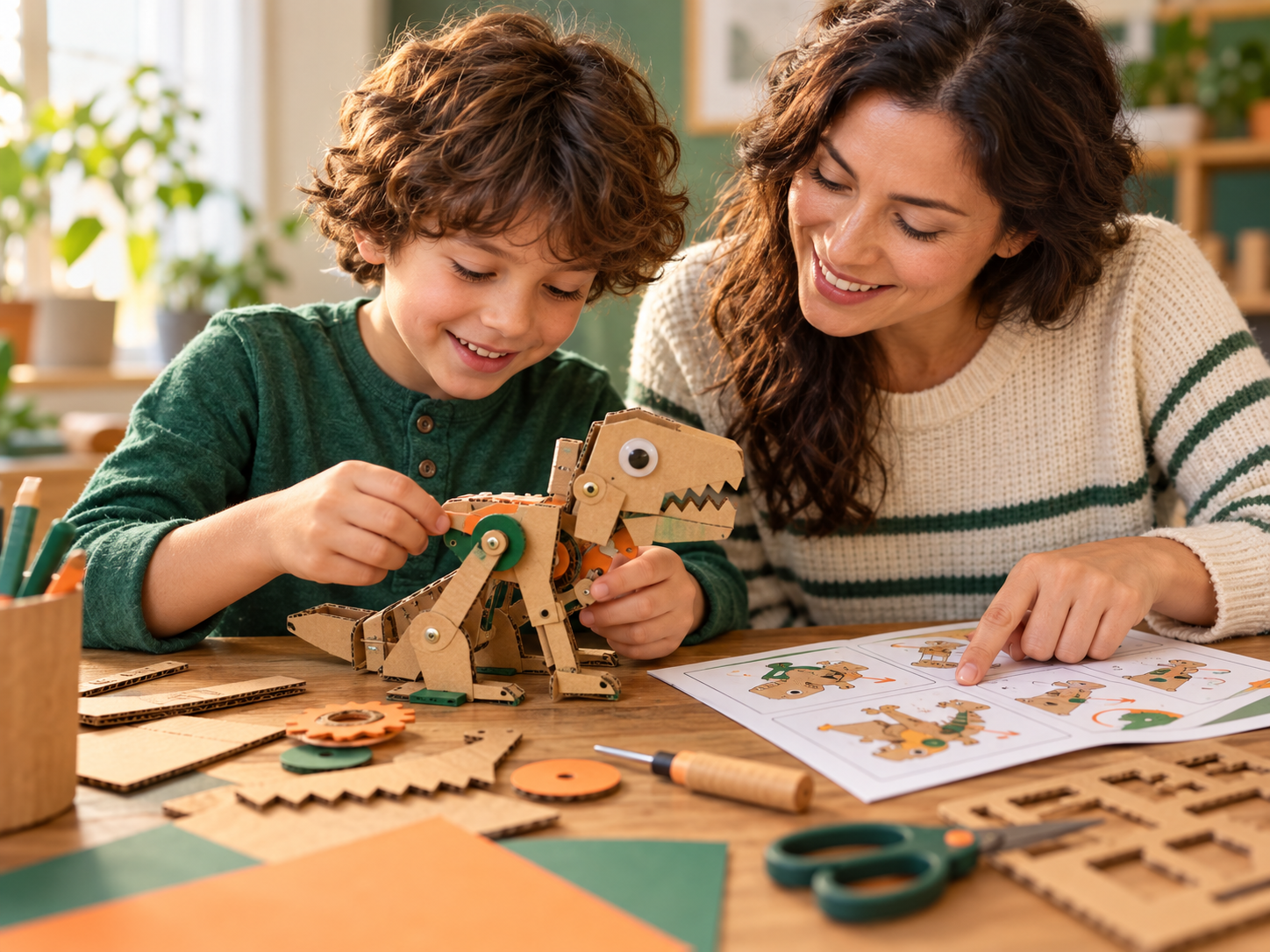
A workbench, simple tools, and a project that comes together step by step. Your child gets involved, tests ideas, and shares the experience of making something meaningful with an adult.
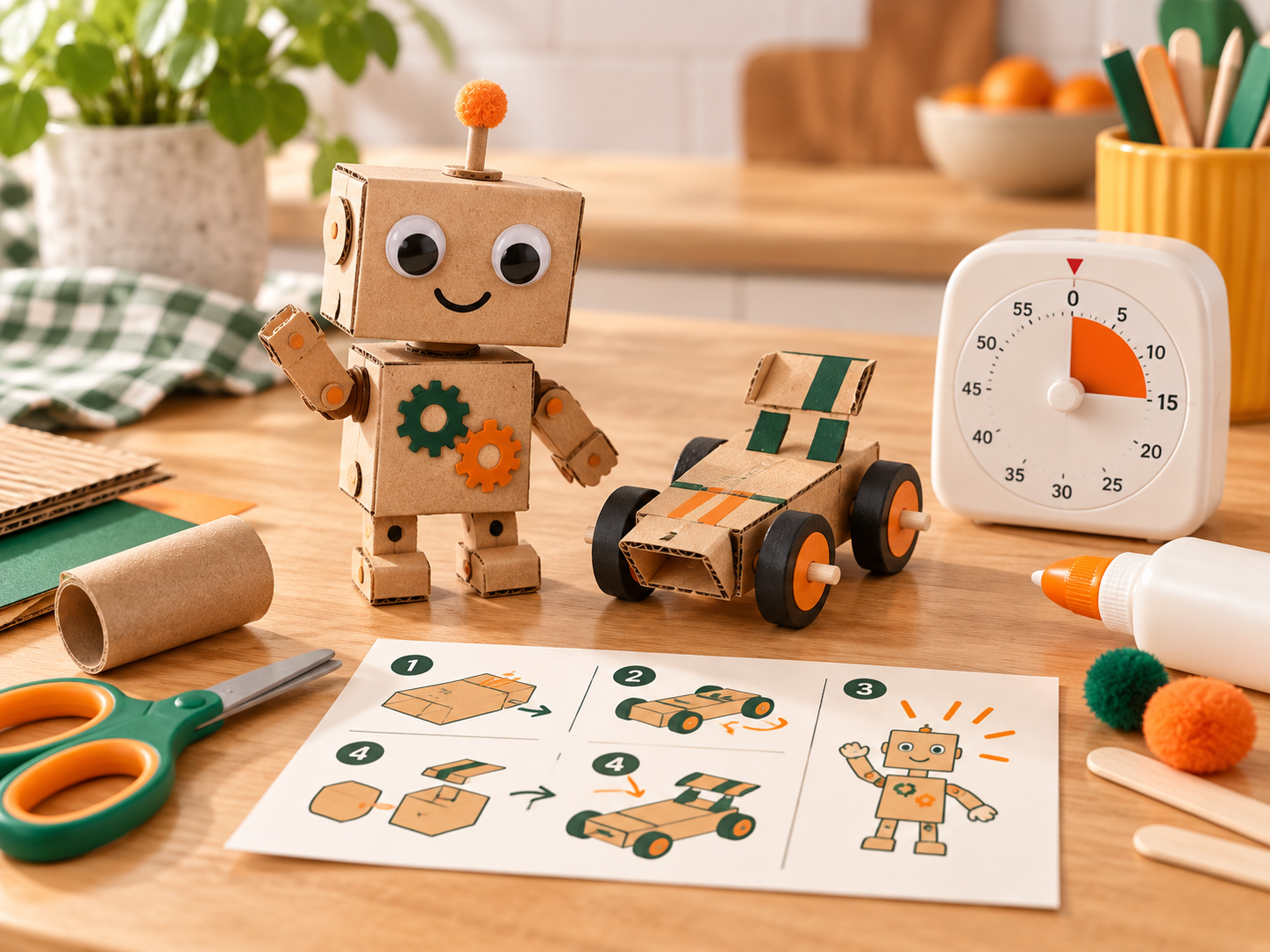
Build robots, vehicles, and machines together using materials you already have at home. Less screen time, more creativity, logic, and problem-solving, with 120+ step-by-step projects and no robotics experience required.
You want them learning while having fun—not spending your afternoons hunting for ideas, buying special supplies, or preparing activities that last less time than they took to set up.
The problem is not just the screen. It is not having a practical, engaging, educational alternative you can put on the table without preparing an engineering lesson first.
Another afternoon in front of a screenYou want to offer something different, but between work, home, and daily routines, handing over the phone, tablet, or console often becomes the easiest option.
The endless search for ideasYou find an amazing cardboard robot, but steps are missing, you are not sure if it is too difficult, or it needs materials you do not have.
The kit that ends up in a drawerYou buy something “educational,” build it once by following fixed instructions, and then it gets stored away because there is nothing new left to discover.
The activity that entertains but does not teachYou build something fun, but the most valuable part gets lost: asking why it works, what failed, how to improve it, and what else could be invented.
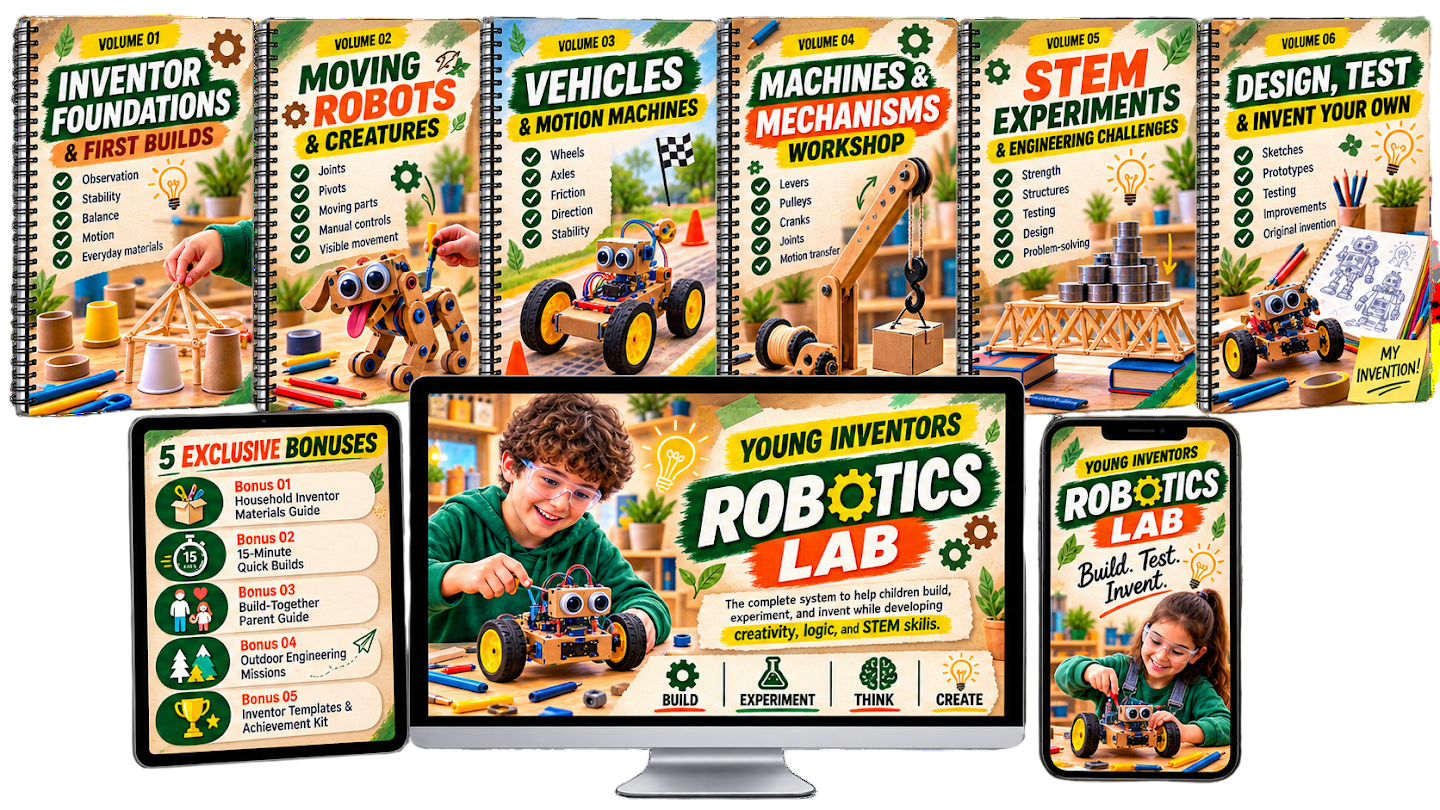
A practical progression from inventor foundations to robots, vehicles, mechanisms, engineering challenges, and finally original creations.
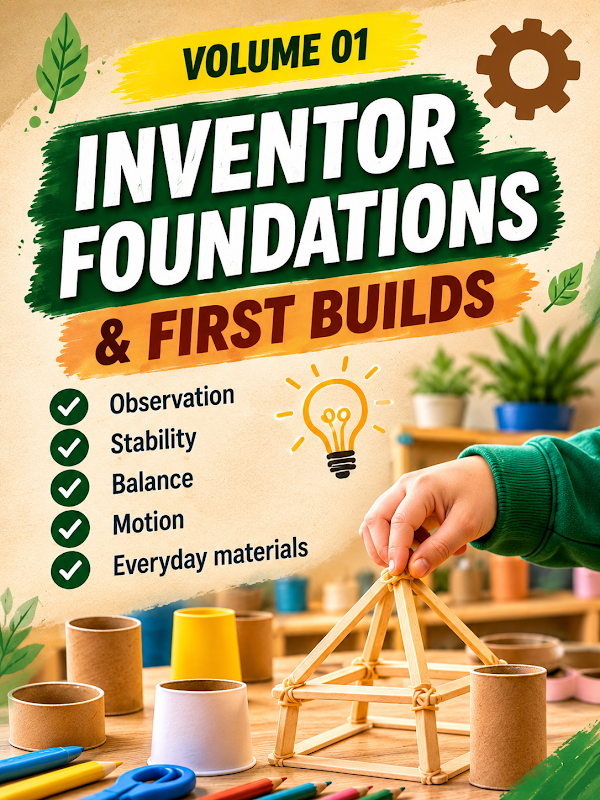
Observation, stability, balance, motion, everyday materials, joints, structures, and first builds.
Joints, pivots, moving parts, manual controls, and mechanisms that make a creature seem to come alive.
Wheels, axles, friction, direction, stability, and motion applied to simple vehicles and machines.
Levers, pulleys, cranks, joints, and motion transfer to understand how force can change direction or create useful motion.
Strength, structures, testing, design, experimentation, and problem-solving through hands-on missions.
Sketches, prototypes, testing, improvements, and original invention so they can move from following steps to creating their own solutions.
Foundations, robots, creatures, vehicles, machines, mechanisms, STEM challenges, and a complete process for designing, testing, and improving original ideas.
Choose a mission, check the age, difficulty, and time, gather household materials, then build, experiment, understand what happens, and improve the result.
Observation, stability, balance, motion, joints, structures, and everyday materials—the foundation for everything that comes next.
Joints, pivots, moving parts, and manual controls for building robots and creatures with visible, understandable motion.
Wheels, axles, friction, direction, and stability applied to vehicles and machines that roll, move, and respond to testing.
Levers, pulleys, cranks, joints, and motion transfer to discover how machines lift, turn, grip, control, and transform movement.
Strength, structures, testing, design, and problem-solving through challenges that make kids observe, compare, and improve.
Sketches, prototypes, testing, improvements, and original invention so they can stop simply following projects and start designing their own robots and machines.
The real value appears when building, understanding, and improving work together: your child makes something with their hands, discovers why it works, and uses that idea to create a better version.
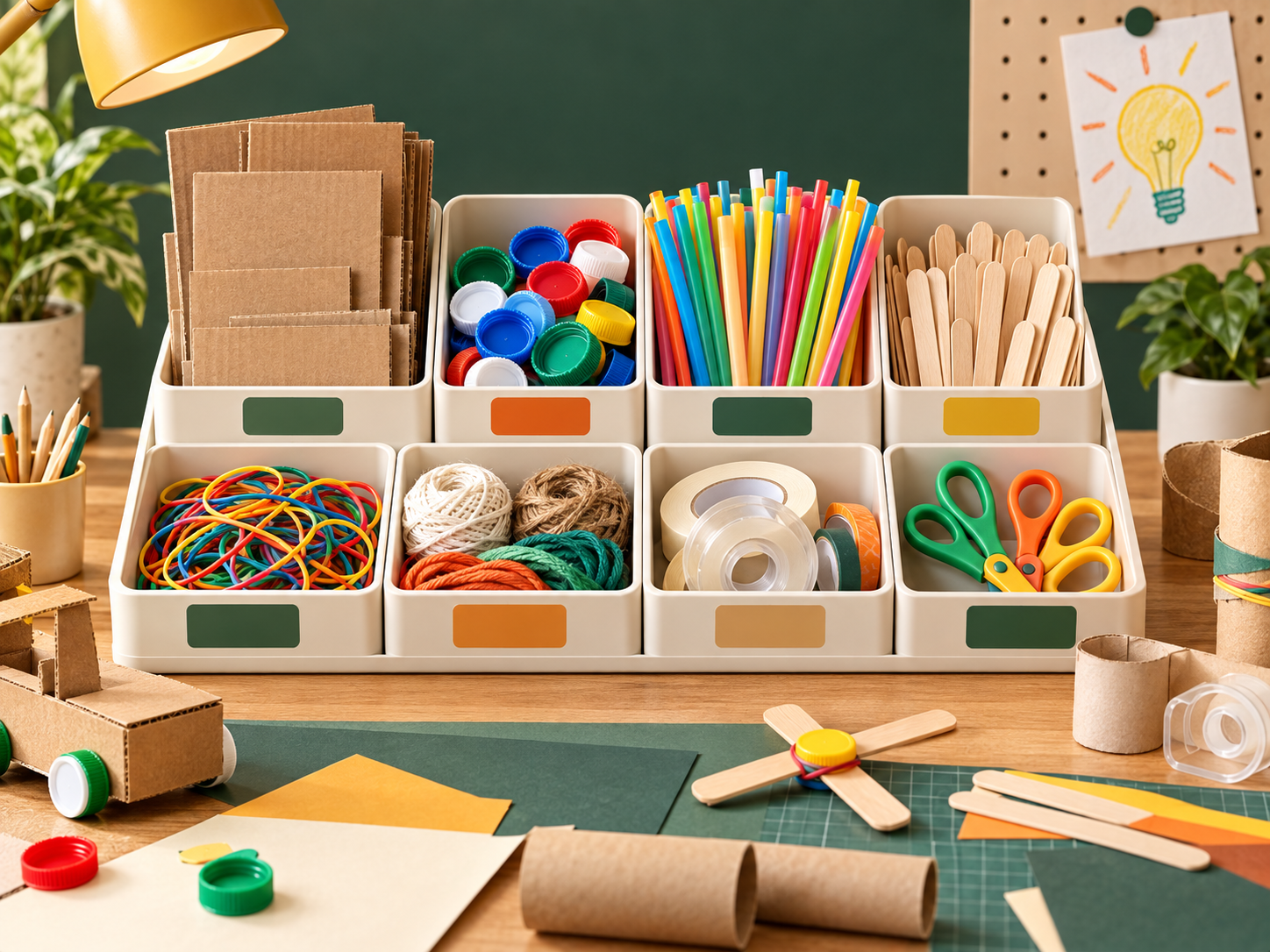
Turn cardboard, bottle caps, straws, and other simple materials into structures, vehicles, robots, and mechanisms they can touch, move, and test.
See what changes when a wheel, axle, base, joint, or force is modified—and connect the build with real STEM concepts.
Test, find what fails, change one thing, and test again until they begin combining ideas and designing their own solutions.
Real pages from Volume 4: mechanisms, step-by-step builds, tests, engineering explanations, comparisons, challenges, and design improvements.
Five extra resources to organize materials, handle busy days, build together as a family, take engineering outdoors, and make progress visible.
What everyday materials are worth saving, what each one can be used for, and how to create a simple inventor station without filling the house with special parts.
Short missions for busy days when you still want to trade screen time for a hands-on activity that ends with something built.
How to help without doing the project for your child: roles, questions, levels of support, and ways to turn building into quality time together.
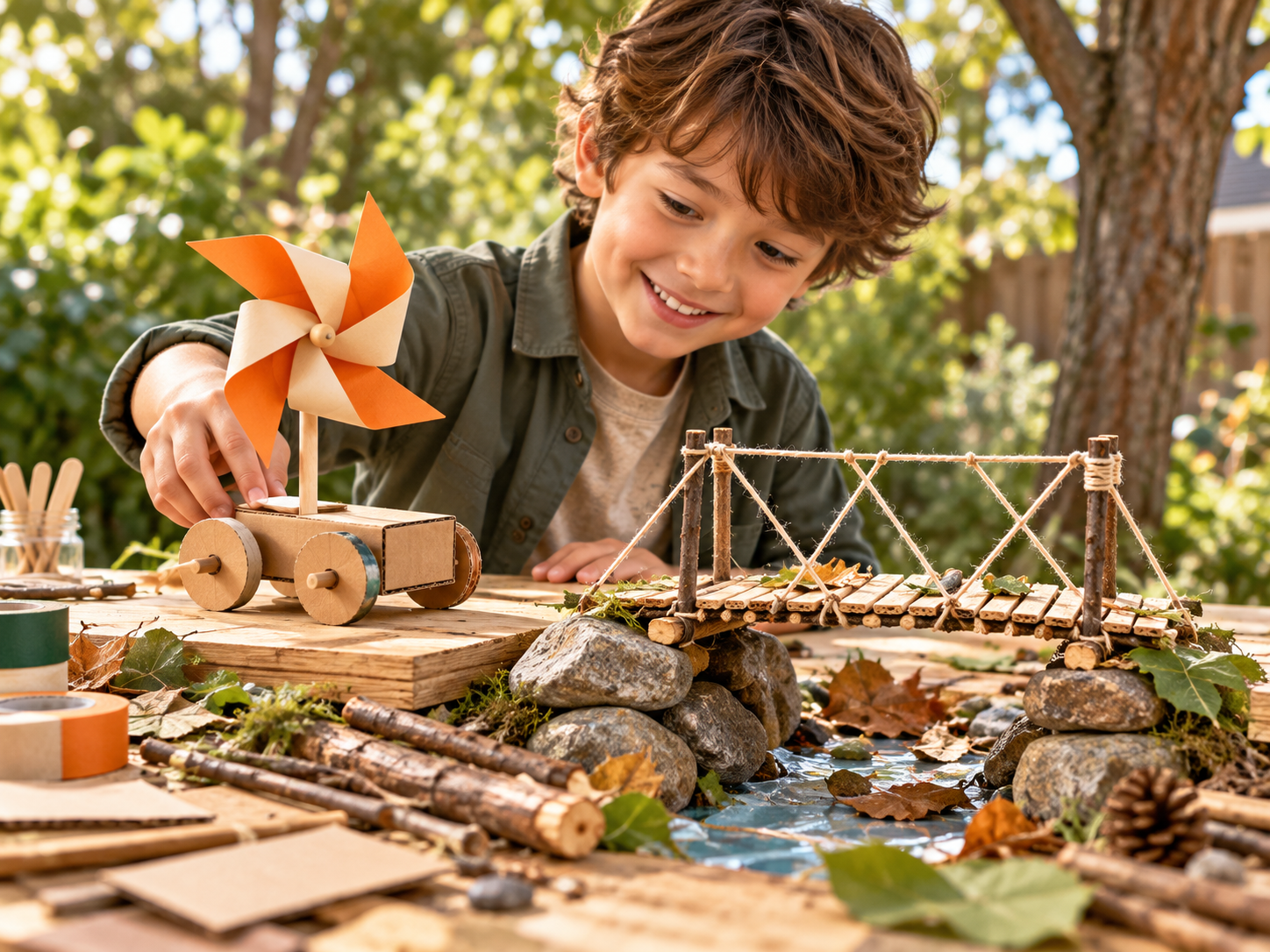
Challenges for observing, designing, and testing structures, motion, and solutions outdoors—using the environment as part of the lab.
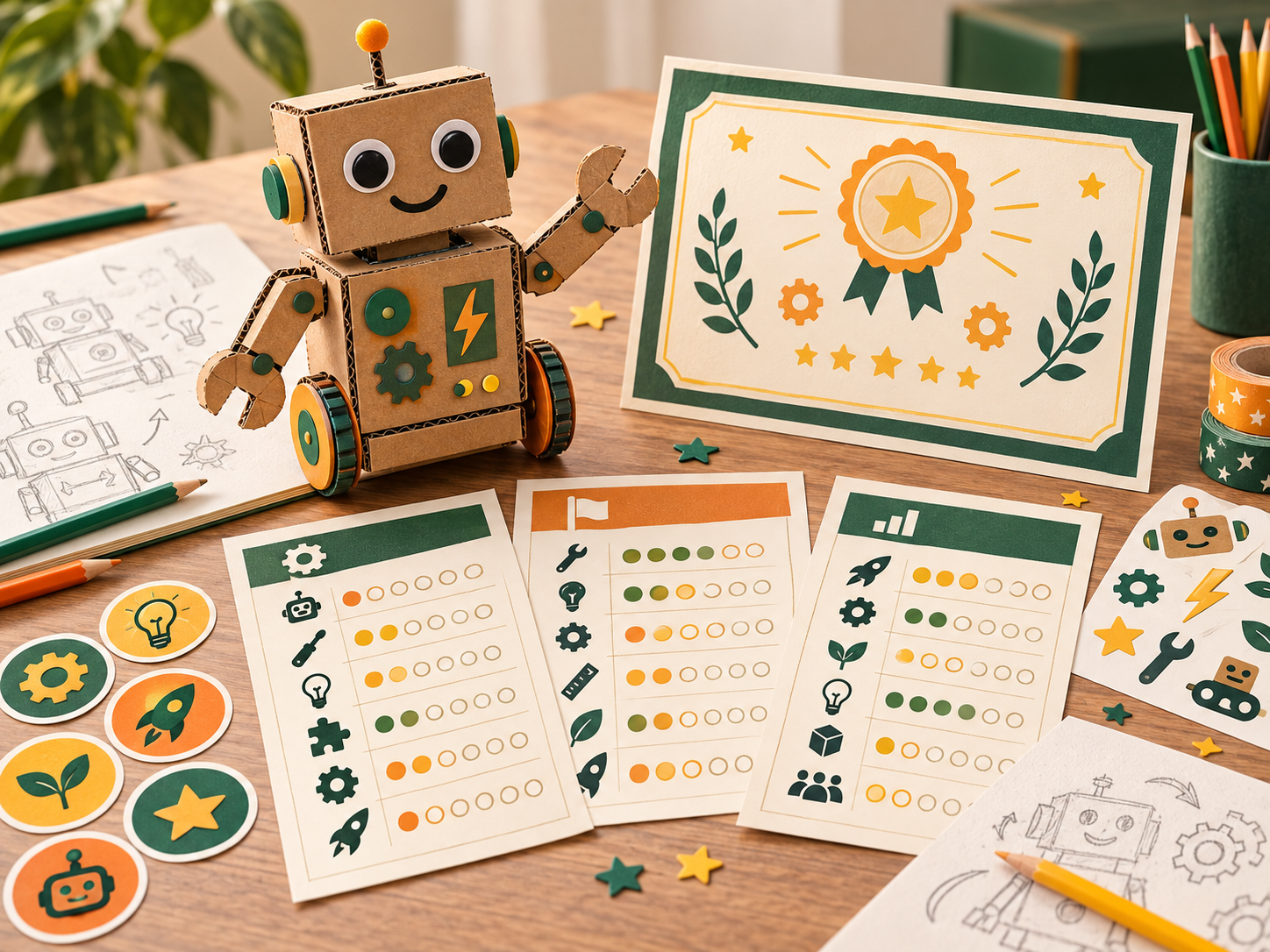
Templates to record projects, tests, improvements, and achievements, plus resources to celebrate progress and keep the motivation to invent going.
YOUR 5 FREE BONUSES
All 5 bonuses, FREE with your purchase Alongside all 6 lab volumes. No subscriptions or extra charges.Replace part of screen time with projects they can build and test with their own hands.
Design, compare, and discover why a wheel turns, a structure holds, or a mechanism moves.
When something does not work, observe, change one thing, and test again until a better solution appears.
Clear projects you can enjoy together—even without any previous robotics experience.
An experience to share
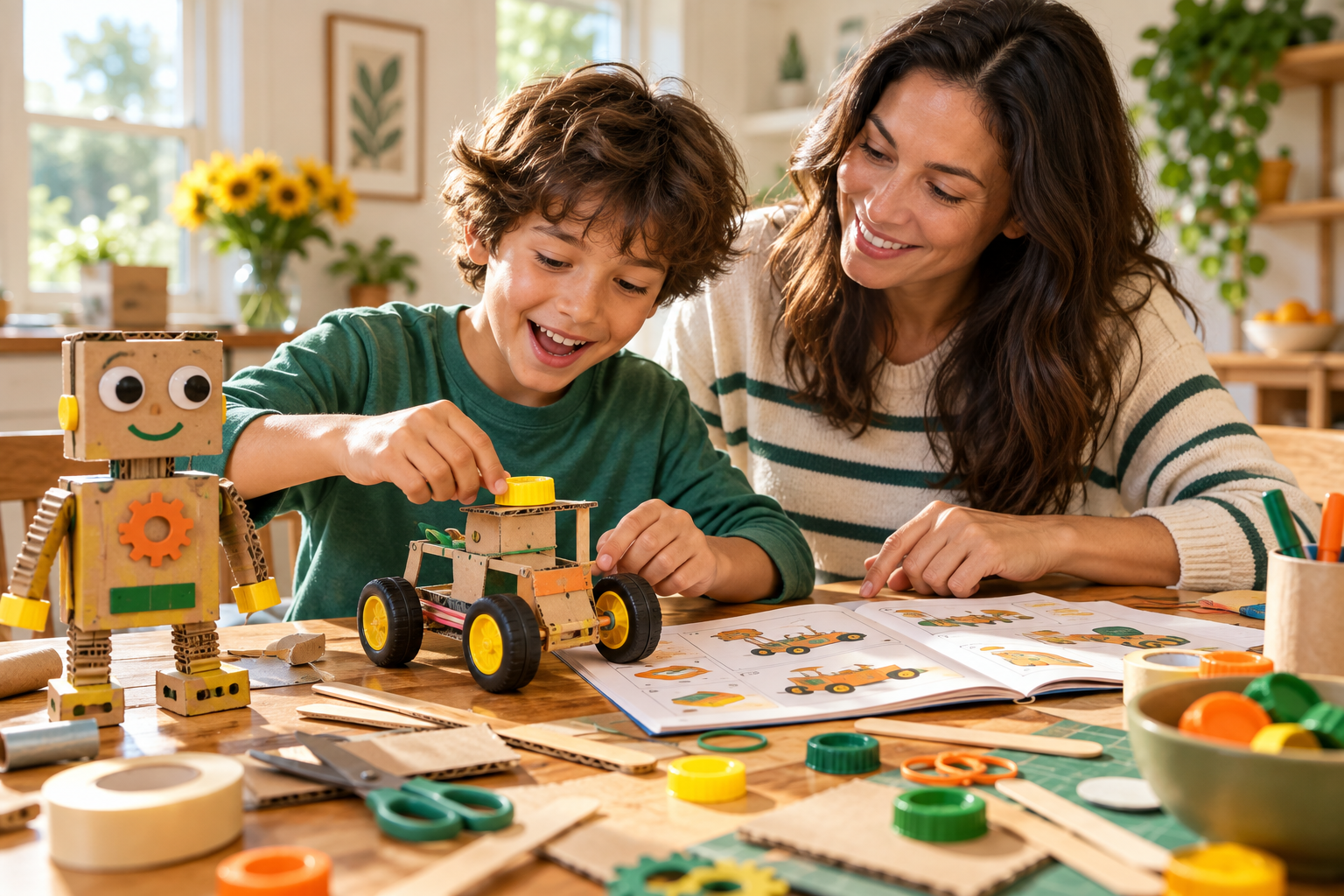
Every project can become a different kind of family moment: an afternoon in the workshop, a creation at the living room table, or a test in the garden. Less screen time. More time to build, talk, and enjoy being together.
A workbench, simple tools, and a project that comes together step by step. Your child gets involved, tests ideas, and shares the experience of making something meaningful with an adult.
At the family table, every piece is a reason to lend a hand, offer encouragement, and watch a structure come to life right before their eyes.
The value isn’t just in finishing a project. It’s the smile when it works, the excitement of testing it outside, and a shared moment that means more than another hour in front of a screen.
LET’S MAKE THESE MEMORIES 6 volumes + 5 bonuses · Step-by-step projects · Activities to build and shareIllustrative images. Projects and materials may vary by activity.
One-time payment · Instant digital access · No subscription
Prices are shown in USD. At checkout, your payment will be converted and charged in your local currency.
Instant access to the core collection of 120+ robotics projects and activities.
US$ 9.90
One-time payment · No subscription
CHOOSE BASICInstant access to 120+ projects
The complete 6-volume lab, 120+ projects, all 5 bonuses, tests and engineering challenges.
US$ 19.90
One-time payment · No subscription · Lifetime access
GET THE COMPLETE PLAN120+ projects · 6 volumes · 5 bonuses
BUY WITH CONFIDENCE
Explore the complete lab with your child for 30 days. If it is not the right fit for your family, request a refund according to the purchase terms.
Young Inventors Robotics Lab is a digital hands-on system for kids ages 5–12 and their families that turns everyday materials into robotics, machine, and engineering projects. It combines step-by-step building, questions, tests, explanations, and challenges to develop creativity, logic, problem-solving, and STEM thinking as kids progress from first builds to designing original inventions.
After purchase, you receive instant digital access to the volumes and bonuses from your phone, tablet, or computer.
It includes 6 step-by-step volumes and 5 bonuses. The system covers inventor foundations, robots, creatures, vehicles, machines, mechanisms, STEM challenges, and a process for designing, testing, improving, and inventing original projects.
The lab is designed for kids ages 5–12. Projects show recommended age, difficulty, approximate time, and level of adult help so families can start simple and progress toward more complex challenges.
No. The missions are organized so an adult can help by following visual instructions. Projects also indicate how much adult help may be needed and when a step should be completed with supervision.
Not to get started. Projects mainly use cardboard, bottle caps, straws, craft sticks, paper, tape, rubber bands, string, and other everyday materials. Each mission shows the materials before you begin.
No. Each project has kids build, test, observe what happens, understand why it works, and then modify or improve the design. The goal is inventor thinking—not simply copying a craft.
You can choose missions by age, difficulty, and available time, although the volume progression is designed so each stage adds new skills before kids begin designing their own inventions.
It depends on the mission and the child’s age. The system indicates the level of adult help and includes safety rules. Difficult cutting, thick cardboard, and any step that feels unsafe should be done with adult help or supervision.
No. It is a one-time payment with lifetime access and no monthly fees.
Yes. The PDF materials can be viewed digitally or printed for personal/family use according to the purchase terms.
Open Young Inventors Robotics Lab, choose a mission, and put a ready-to-go activity on the table that gets your child building with their hands, thinking, and wanting to keep testing.
BUILD. TEST. INVENT.
Give your child the complete 6-volume inventor experience—with 120+ projects and all 5 exclusive bonuses.
SEE THE COMPLETE PLANInstant digital access · One-time payment · No subscription

ONE-TIME UPGRADE OFFER
Before you continue with Basic, get the full Young Inventors experience—with every volume, every bonus and our 30-day guarantee.
One-time payment · No subscription · Charged in your local currency at checkout